

ॐ
Creator of the Universe • Sacred Pilgrimage • Eternal Faith
The Only One on Earth: Why Pushkar’s Brahma Temple is an Absolute Must-Visit
If you know anything about India, you know there are literally millions of temples dotting the landscape. You can’t throw a stone without hitting a gorgeous shrine dedicated to Lord Shiva or Lord Vishnu. But when it comes to Lord Brahma—the literal creator of the universe? Crickets.
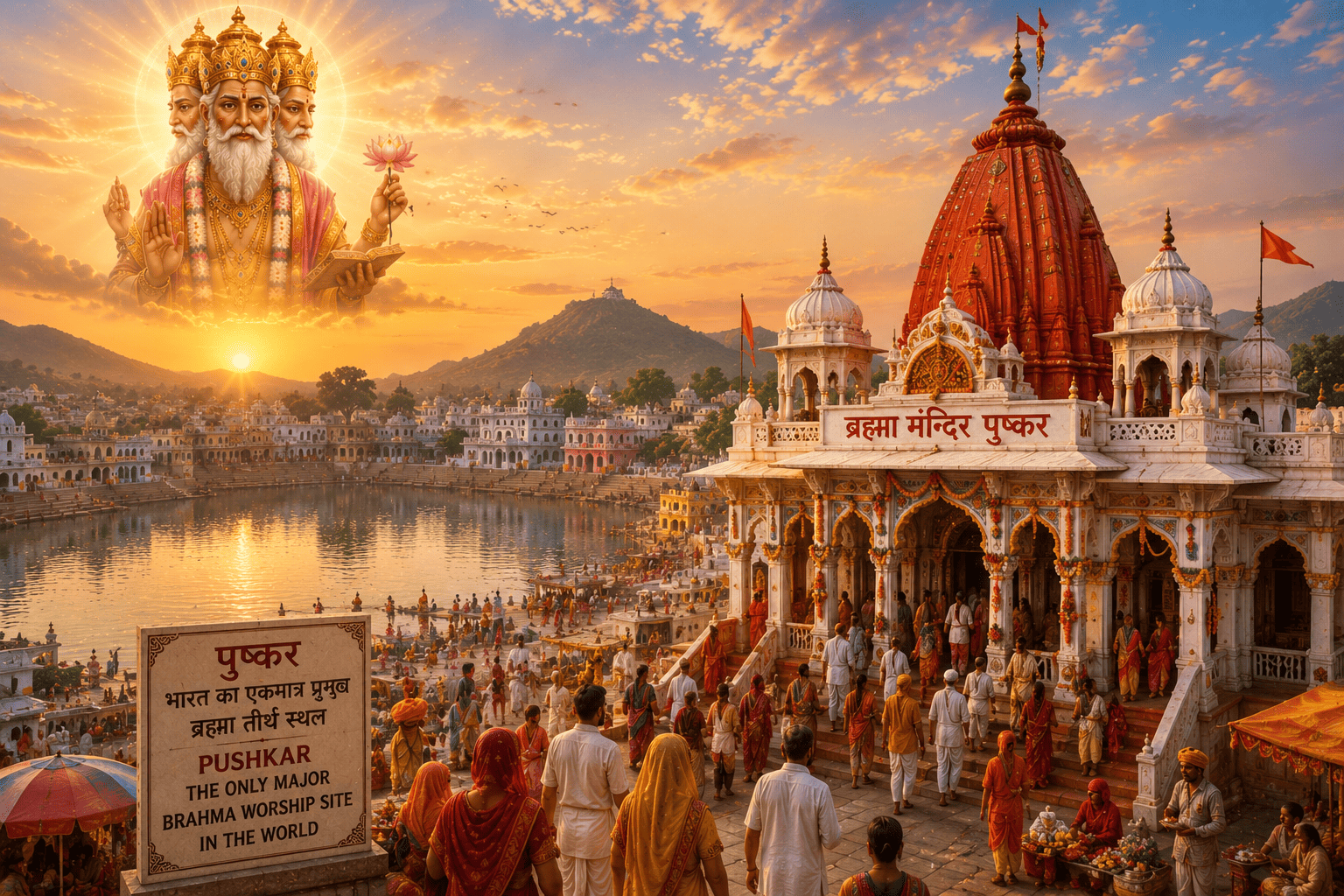
He has exactly one major, globally renowned seat of worship, and it’s tucked away in the dusty, deeply spiritual, and slightly chaotic town of Pushkar, Rajasthan.
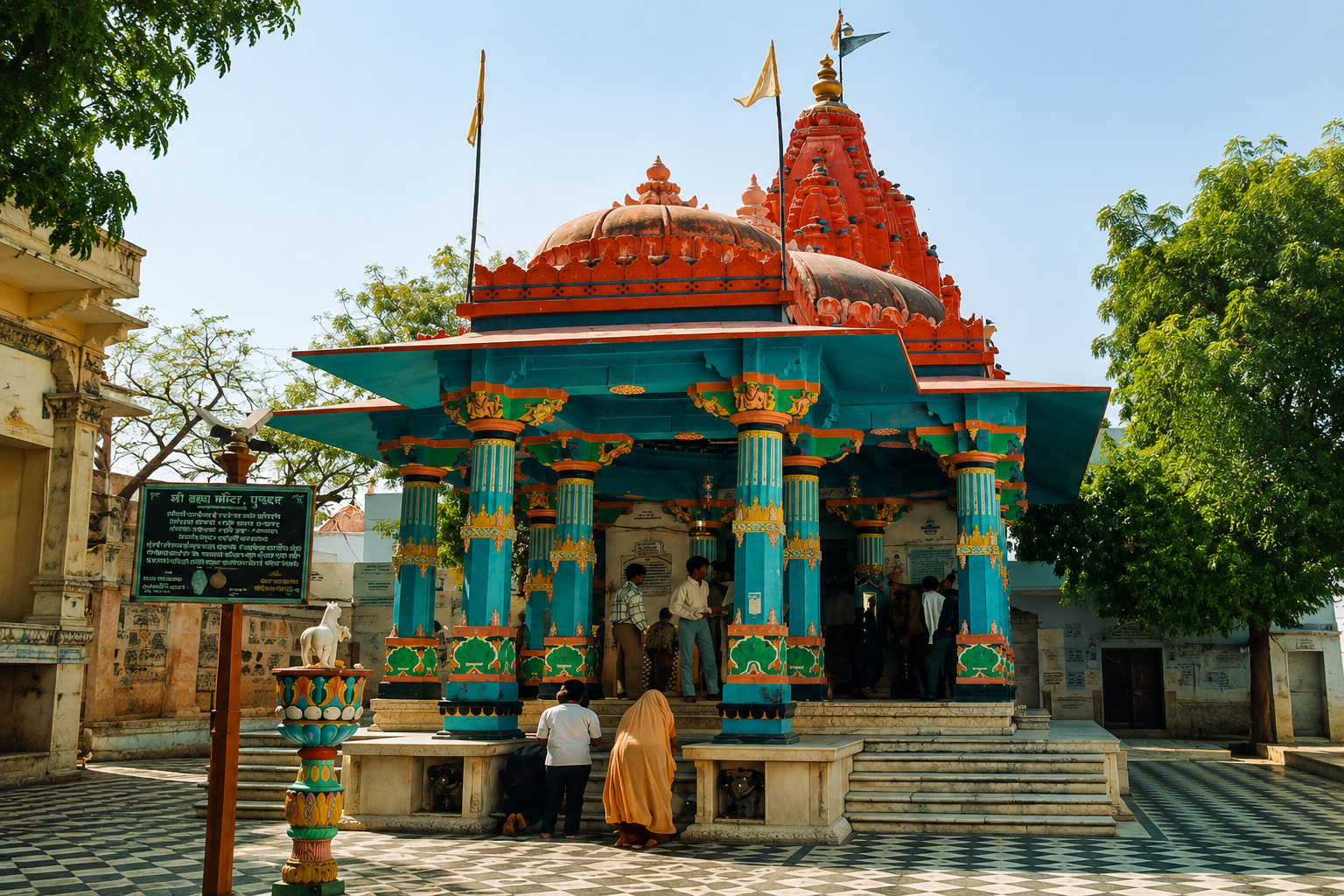
When you walk up to the temple, the first thing that hits you isn’t just the history—it’s the visual punch. Unlike the ancient stone temples you see elsewhere, this place rocks a striking, bright red spire and an outdoor pillared hall painted in vivid blues and greens. It has this incredibly distinct, vibrant energy that tells you right away you’re standing somewhere unique.
The Divine Drama: Why Brahma Got Cursed
So, how does the literal Creator of everything end up with only one main temple? Well, the mythological backstory reads like a high-stakes family drama, and honestly, it’s fascinating.
Legend says Brahma dropped a lotus flower to the earth, and where the petals hit the desert ground, the sacred waters of Pushkar Lake bubbled up. He decided this was the perfect, high-energy spot to perform a massive yajna (a sacred fire ritual).
Here’s where the drama kicks in: the ritual absolutely required his wife, Goddess Savitri, to be seated next to him. But Savitri was running late. With the auspicious astrological clock ticking away, Brahma couldn’t wait. In a classic panic move, he married a local girl named Gayatri on the spot just to get the ceremony started.
When Savitri finally showed up and saw another woman sitting in her place? She was absolutely furious. In her rage, she laid down a brutal curse: Brahma would never, ever be worshipped anywhere else on earth except right here in Pushkar.
And that curse stuck. While the current marble-and-stone structure “only” dates back to the 14th century, people have been making pilgrimages to this exact spot for over 2,000 years because of that cosmic fallout.
What It's Actually Like to Visit
Pushkar itself has this surreal, slow-paced, bohemian-meets-ancient vibe, but the Brahma Temple is where the spiritual pulse beats the fastest.
You’ll climb up a flight of marble steps, surrounded by the intense fragrance of incense and the non-stop, rhythmic clanging of temple bells. Inside, you’re greeted by a four-faced idol of Brahma. Devotees crowd the courtyard, embedding silver coins into the marble floors and looking for a moment of quiet connection.
My biggest tip? Don’t just rush into the temple. Do what the locals do: head down to the nearby Pushkar Lake first. Take a moment on the ghats (the stone steps leading into the water), watch the reflection of the sky, and then walk up to the temple.
It doesn’t matter if you’re a devout pilgrim, a history nerd, or just a backpacker exploring Rajasthan—standing in the one place on Earth dedicated to the universe’s creator feels heavy in the best way possible. It’s an unforgettable stop that stays with you long after the Rajasthan dust has settled on your shoes. is this content humanized?
The Divine Origin of Pushkar
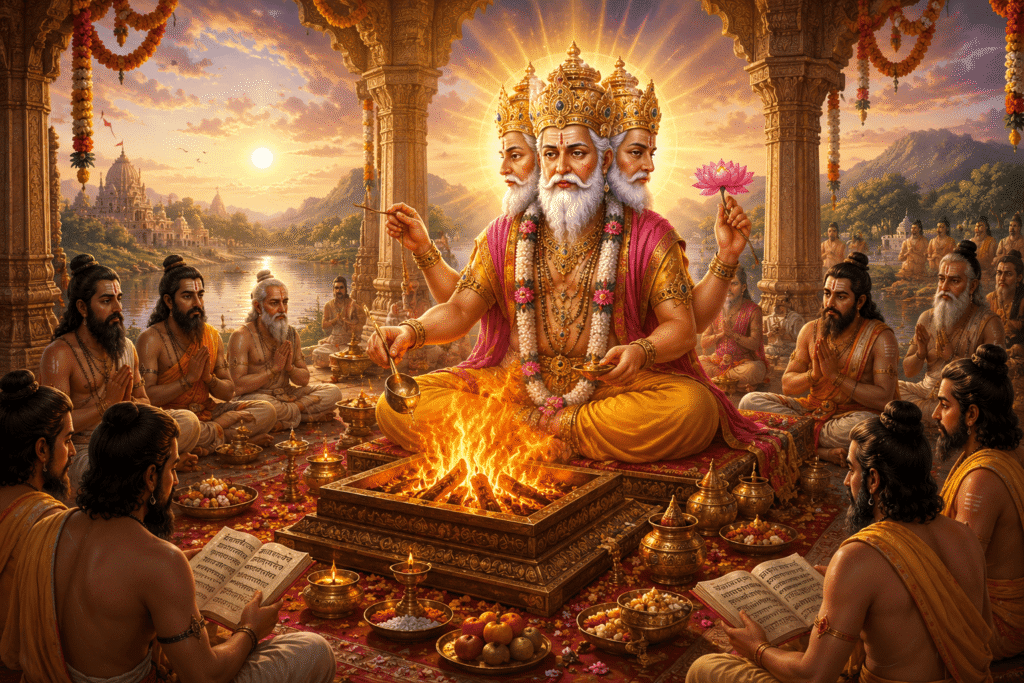
1. Lord Brahma Performs a Sacred Yajna
Lord Brahma chose a holy place on Earth to perform a grand yajna for the welfare of creation.
2. A Lotus Falls from the Heavens
During the sacred ritual, a lotus flower slipped from Brahma’s hand and descended to Earth.
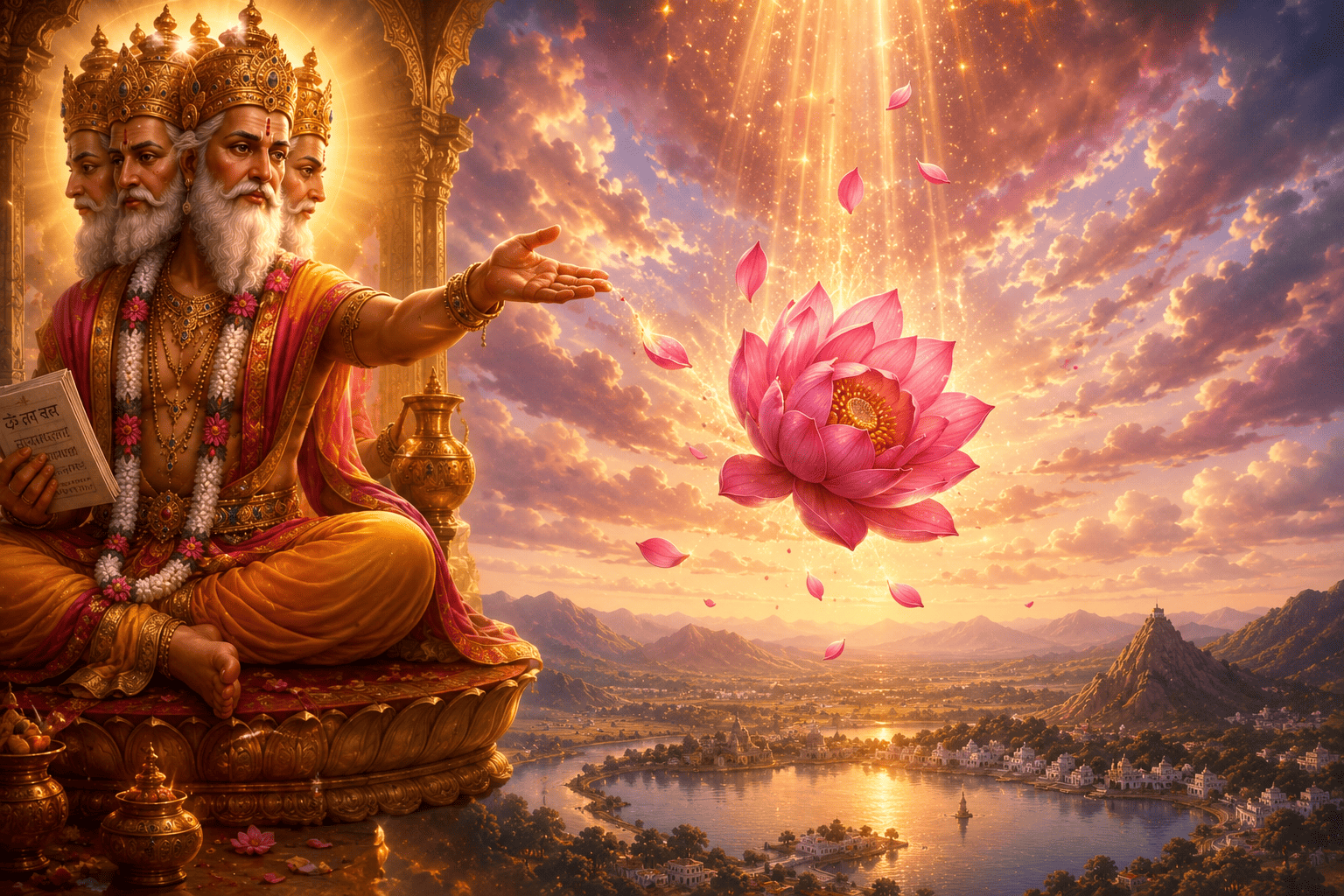
3. Pushkar Lake is Created
The spot where the lotus touched the ground became the sacred Pushkar Lake, blessed with divine energy.
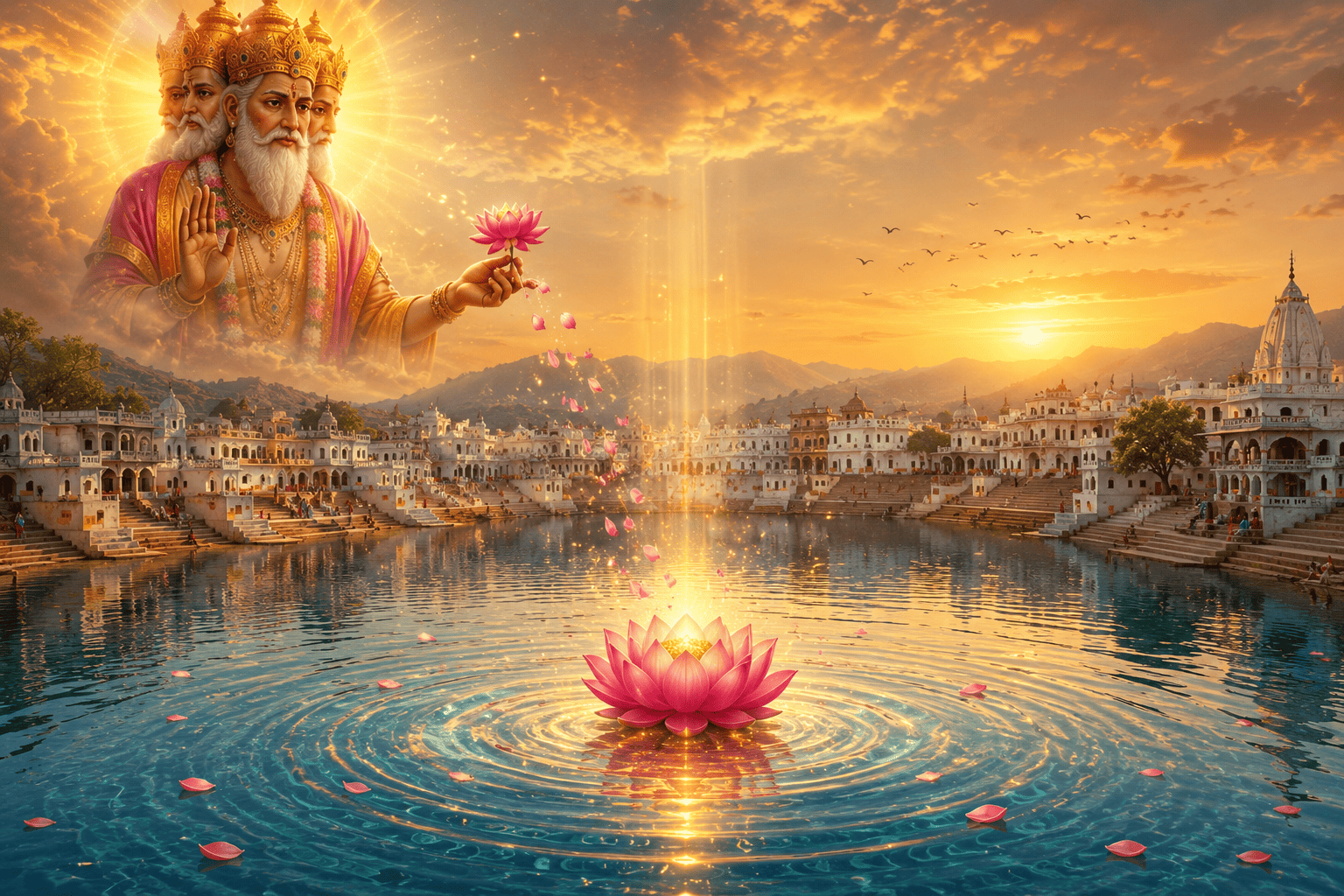
4. Goddess Savitri Arrives
As the yajna began, Goddess Savitri reached the site and discovered that the ceremony had already started.
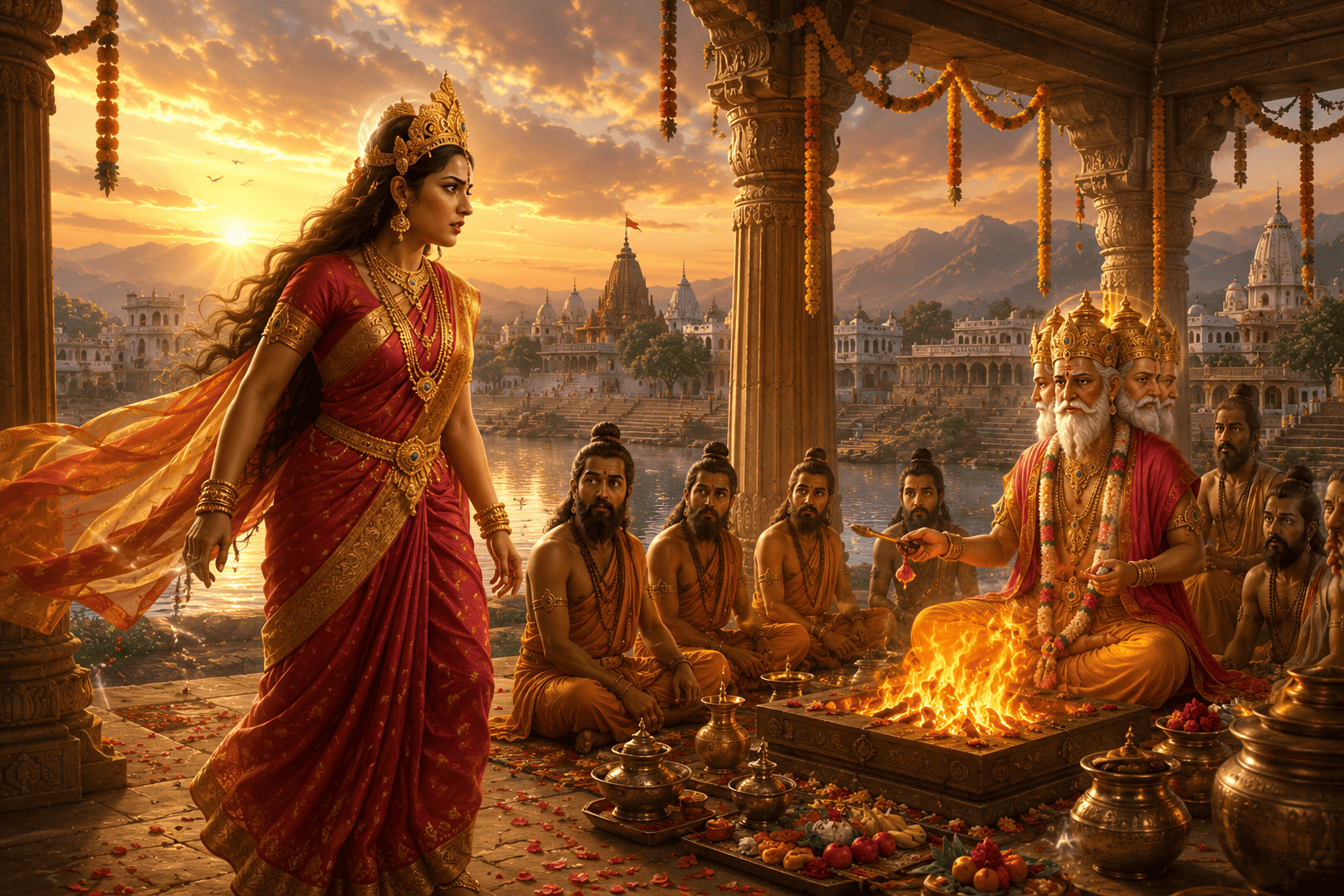
5. Lord Brahma Receives the Curse
Angered by the events, Goddess Savitri cursed Brahma that he would not be widely worshipped anywhere else in the world.
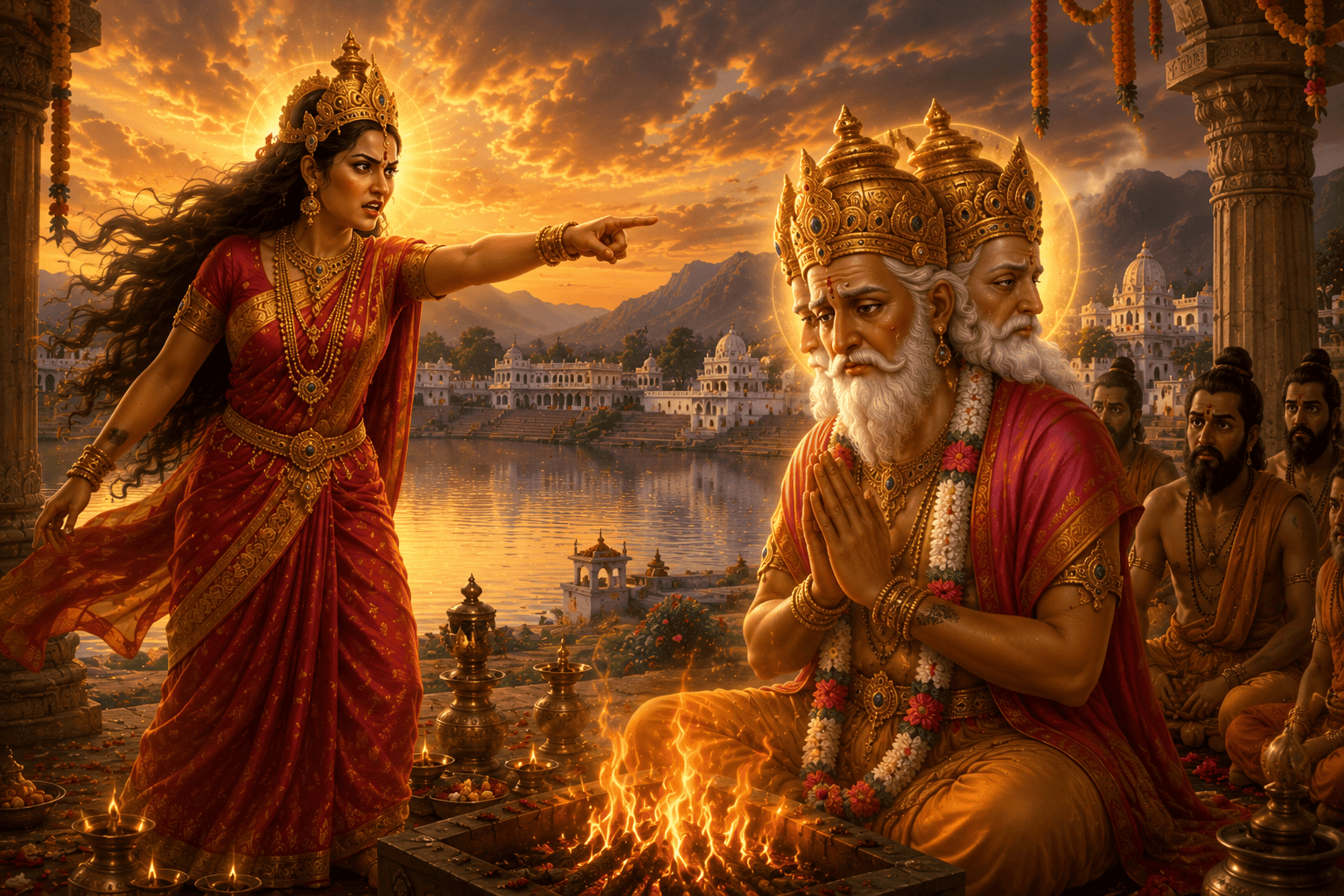
6. Pushkar Becomes the Only Major Brahma Worship Site
As a result of the divine curse, Pushkar became the most sacred and renowned place dedicated to the worship of Lord Brahma.
What It’s Actually Like Inside the Brahma Temple
Stepping inside the temple is an immediate sensory shift. You’re hit with a mix of ringing bells, the thick scent of incense, and a wall of chanting. It’s undeniably tranquil, but fair warning: it gets incredibly crowded. Thousands of people flock here for blessings on wisdom and prosperity, and the standard move is to pair the temple visit with a quick, ritual dip in Pushkar Lake first to “cleanse your sins.”
If you want to see this place turn into an absolute festival of color and chaos, try to time your trip during Kartik Purnima or the world-famous Pushkar Camel Fair in November. The energy is unmatched, though you’ll definitely be trading tranquility for pure, vibrant madness.
The Architecture: Look for the Turtle
Architecturally, the temple is classic, gorgeous Rajasthani style, and you literally can’t miss it—just look up and find the bright red shikhara (spire) cutting through the skyline. It’s built out of marble and stone, but here are the two things you actually need to keep an eye out for while walking through:
The Silver Turtle: Look down at the floor; there’s a beautiful silver turtle embedded right into the marble.
The Four-Faced Idol: Inside the main inner sanctum, you’ll see the magnificent idol of Brahma. He has four faces, symbolizing the four Vedas and the four directions, and he’s flanked by his two wives, Gayatri and Savitri (yes, the same Savitri who threw the temper tantrum and cursed him in the first place).
Planning Your Visit: Tips from a Local Perspective
If you’re planning to experience it for yourself, here is a quick, practical breakdown to help you navigate your day without the headache:
🕒 When to Go (Daily Timings)
The temple takes a short afternoon break, so plan your visit around these two windows:
Morning Session: 6:30 AM – 1:30 PM
Evening Session: 3:00 PM – 9:00 PM
💰 Entry Fees
- Completely Free. There is absolutely no entry fee to visit the temple. Donations are entirely voluntary, so don’t feel pressured by anyone asking for mandatory fees or expensive flower offerings inside. Just politely say “no thank you” and keep walking.
📅 The Best Time of Year
- October to March: This is the absolute sweet spot. The desert heat cools down significantly, making walking through the town incredibly pleasant.
- The Pushkar Camel Fair (November): If you don’t mind massive crowds, this is when the town truly comes alive. It’s chaotic, vibrant, and packed with cultural energy.
Making the Most of Your Trip: Nearby Spots You Can’t Miss
The Brahma Temple sits right in the cultural hub of the town, meaning you can easily hit a few other incredible stops just by walking around:
Pushkar Lake: Just a short walk away. Walk down the 52 holy ghats (the stone steps leading into the water). It’s incredibly peaceful around sunset, just remember to take your shoes off well before you hit the steps.
Savitri Temple: This one is perched high up on Ratnagiri Hill. You can hike up or take a quick ropeway ride. Pro-tip: Go here for sunset. It gives you the absolute best panoramic views over the entire lake and town.
Rangji & Varaha Temples: If you haven’t got temple fatigue yet, Rangji features a really cool blend of South Indian and Rajput architecture, while Varaha is one of the oldest, grittiest ancient structures in the area.
Pushkar Bazaar: A total maze of local textiles, silver jewelry, incense, and traditional handicrafts. Be prepared to bargain hard!
How to Get There
Pushkar is tucked away, but it’s pretty easy to reach depending on how you like to travel:
By Air: Your closest option is Kishangarh Airport (about an hour away), but flights are limited. Most people fly into Jaipur International Airport (about 3 hours away) and just grab a private cab straight to Pushkar.
By Train: Aim for Ajmer Junction. It’s super well-connected to major hubs like Delhi, Mumbai, and Jaipur. Once you step off the train at Ajmer, you’re only 15 km away. Grab a taxi, an auto-rickshaw, or a local bus to zip over the mountain pass into Pushkar (about a 20–30 minute ride).
By Road: The roads in Rajasthan are fantastic. If you’re road-tripping, it’s a quick 15 km from Ajmer, 145 km from Jaipur, or a longer 415 km drive if you’re coming down from Delhi.
The Best Times to Experience the Magic
If you want to see this place truly come alive, there are two major events you need to know about:
Kartik Purnima: This is the big one. It’s a holy full moon night where thousands of people gather at the temple for special prayers. The energy in the air during this time is absolutely electric.
The Pushkar Fair: Held around the same time in November, this is a world-famous festival. It’s a massive, vibrant mix of spiritual rituals, folk music, dancing, and a giant livestock market. It’s colorful, loud, and an amazing window into traditional Rajasthani culture.
Why You Should Actually Visit
Let’s be honest: India has thousands of beautiful temples, so what makes this one so special?
For starters, it’s one of the only major temples in the entire world dedicated to Lord Brahma. Standing in a place with that kind of unique history is a pretty surreal feeling.
People don’t just come here to cross a sight off their bucket list; they come for the vibe. Between the peaceful atmosphere inside, the stunning ancient architecture, and the sacred Pushkar Lake just a short walk away, it’s a place that makes you want to slow down, take a breath, and just soak it all in. Whether you are spiritual or not, the cultural richness of this town completely stays with you.
The Final Verdict
Look, you can find thousands of temples dedicated to Shiva or Vishnu all over India, but Pushkar is special because it’s one of the only places on Earth where you can stand in a major temple dedicated to Brahma. Whether you’re there for the deep spiritual history, the wild mythology, or just to take in the unique vibe of a holy desert town, it’s a spot that completely stays with you long after you leave.